

Commentary
Nikita Smagin
{
  "authors": [
    "Nikita Smagin"
  ],
  "type": "commentary",
  "blog": "Carnegie Politika",
  "centerAffiliationAll": "",
  "centers": [
    "Carnegie Endowment for International Peace",
    "Carnegie Russia Eurasia Center"
  ],
  "collections": [
    "The Iran War’s Global Reach"
  ],
  "englishNewsletterAll": "",
  "nonEnglishNewsletterAll": "",
  "primaryCenter": "Carnegie Russia Eurasia Center",
  "programAffiliation": "",
  "regions": [
    "Iran",
    "Russia"
  ],
  "topics": [
    "Military",
    "Foreign Policy"
  ]
}
Source: Getty
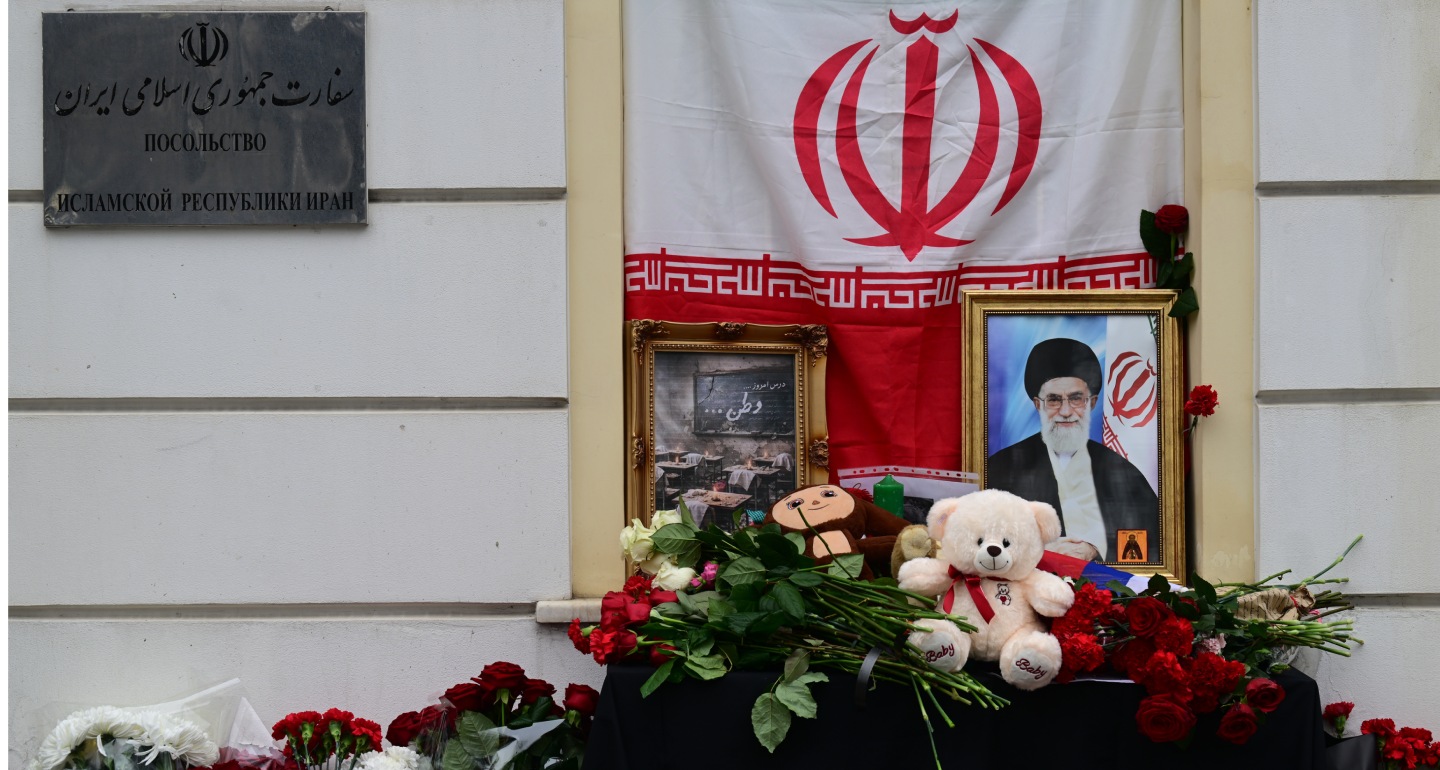
If the regime in Tehran survives, it could be obliged to hand Moscow significant political influence in exchange for supplies of weapons and humanitarian aid.
Attacks by the United States and Israel have inflicted colossal damage on Iran, killing Supreme Leader Ali Khamenei and destroying military and political infrastructure. Even if the Iranian regime manages to cling on, the fighting will end up damaging Russian interests and jeopardizing its projects in the region. However, there is little chance that the Kremlin will give up on Tehran. Indeed, the war could ultimately make the Iranian regime more reliant than ever on Moscow.
The consequences of the war when it comes to Russia–Iran ties depend on how long the fighting lasts, the severity of the subsequent crisis, whether the regime can hold on, and a host of other difficult to predict criteria. Nevertheless, it’s possible to identify a number of trends.
In the short term, Russia looks set to gain. In particular, it will earn more money from energy sales. The fighting has already seen oil and gas prices rise, and Tehran’s blockade of the strait of Hormuz could push global oil prices to unprecedented highs. If this continues, it could lead to a global energy crisis that would make Russian hydrocarbons more attractive, despite Western sanctions. In addition, the collapse of Iranian exports means Russia can increase oil supplies to China (thus compensating for India’s decision to buy less Russian crude).
However, a drawn-out war would jeopardize Russian interests in Iran. First, it would cast doubt over the viability of the proposed North-South transport corridor connecting Russia to the Indian Ocean. While there are doubts about whether this can ever be profitable, the corridor has strategic value for the Kremlin because the Russian economy needs access to global markets after traditional Western routes were closed by sanctions.
Second, it would make it difficult to set up a Russian “gas hub” in Iran. The logic for this project is similar to that of the North-South corridor: while its profitability is unclear, Moscow hopes a hub would facilitate supply route diversification and enable the return of Russian gas to global markets.
Many other Russian projects in Iran could also be scuppered by the current conflict. These include Russia’s involvement in the production of oil via the ZN Vostok company; state-owned nuclear corporation Rosatom’s construction of new units at the nuclear power plant in Bushehr (in 2025, Moscow and Tehran also reached a $25 billion preliminary agreement to build the Hormoz Nuclear Power Plant); and assistance building the Sirik thermal power plant.
If the regime survives but the war’s legacy is instability, poor governance, protests, devastated infrastructure, and general uncertainty, it would make investment a waste of time. If there is a change of regime, though, it’s likely that Iran’s new government would be anti-Russian and keen to cut ties with Moscow.
It’s unsurprising, therefore, that Moscow immediately criticized the actions of the United States and Israel, calling them an “unprovoked act of armed aggression” and a violation of international law. Putin unequivocally condemned the assassination of Khamenei.
At the same time, the Kremlin has few ways to influence the situation. It’s difficult to imagine Russia would risk a confrontation with the United States and Israel to save the Iranian regime, so direct military intervention can be ruled out.
Moscow values its relationship with Israel, which supports Russia’s retention of military bases in Syria as a counterbalance to Turkey. Nor does the Kremlin want to ruin its relations with Trump—it still harbors hopes of striking a deal over Ukraine. As a result, Moscow has limited itself to expressions of outrage over the attacks and demanding a meeting of the United Nations Security Council.
Nevertheless, if—in one form or another—the Iranian regime survives, Moscow could try to turn the situation to its advantage. When the missiles stop flying, Russia will be one of the few countries in the world ready and able to work with Tehran. After being shelled by Iran during the latest conflict, Iran’s traditional partners like the United Arab Emirates or Qatar are unlikely to want to restore political or economic ties.
An isolated regime in Tehran wouldn’t have much choice but to seek Moscow’s help, and Moscow has already shown its willingness to strengthen military ties. In recent years, Tehran has taken delivery of several Russian Yak-130 trainer jets, several dozen Spartak armored vehicles, small arms (including Orsis T-5000M sniper rifles), and—in January 2026—attack helicopters.
Contracts have also been signed for Russia to supply Iran with up to fifty Su-35 fighter jets and no less than 500 Verba man-portable air defense systems (MANPADS). While Russian military equipment won’t help the regime withstand the United States and Israel, it might be useful if there’s an armed uprising or civil war.
In such a scenario, it seems unlikely Tehran would be able to pay Moscow for its support. But Moscow has plenty of experience when it comes to helping friendly countries in return for a slice of their sovereignty: for example, the arrangement between the Kremlin and ex-Syrian President Bashar al-Assad.
Moscow might well be able to exert pressure not only via military supplies, but also with humanitarian aid. Russian companies have halted grain exports to Iran amid the fighting, and after the war’s end, Tehran will have to come up with a way to pay for their resumption.
It’s true that the war threatens the viability of many Russian ventures in Iran—but that’s unlikely to mean Moscow becomes any less interested in the country. On the contrary, the Kremlin would almost certainly seek to exploit a devastated, internationally isolated, post-war Iran to increase its regional influence.

Expert on Iranian foreign and domestic policies, Islamism, and Russia's policy in the Middle East
Recent Work
Nikita Smagin
Nikita Smagin
Carnegie does not take institutional positions on public policy issues; the views represented herein are those of the author(s) and do not necessarily reflect the views of Carnegie, its staff, or its trustees.

The demands of the Kremlin’s war in Ukraine, demographic problems, and public hostility toward Central Asians mean Russia does not have enough workers.

Salavat Abylkalikov
Minsk’s faith in the future of its larger neighbor’s economy is fading as Belarusian firms in Russia see record losses.

Olga Loiko
With no key agreement signed on the Power of Siberia 2 gas pipeline, there is a risk that the window of opportunity for Russia will close if Chinese power generation becomes so green that new gas sources are no longer of any interest to Beijing.

Alexander Gabuev
Though Orban is gone, Putin can still count on some like-minded individuals in Central and Eastern Europe. However, they will seek to avoid open confrontation with EU institutions over Ukraine and their ties with Moscow.

Dimitar Bechev
The truth is that Japan’s government is seeking a degree of reengagement but at a vastly reduced level than under Abe. Most significantly, Japan has shown no willingness to ease sanctions.

James D.J. Brown